Alaska Cruise Guide: 7 Things to Know Before You Book
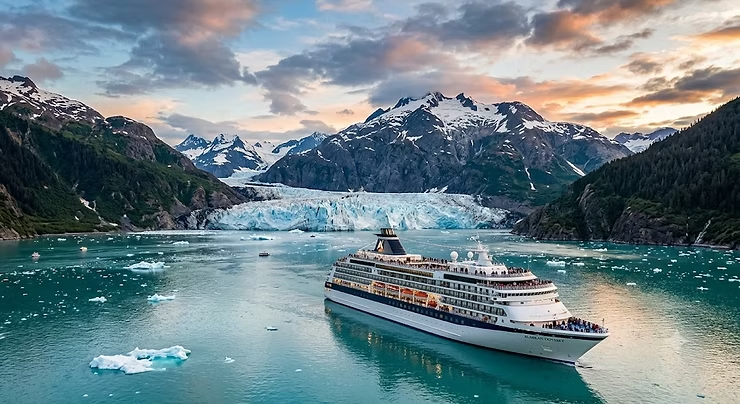
Most cruise destinations are about the places you stop. Alaska is different. Here, a great deal of what you came to see happens from the deck of the ship — glaciers calving into the water, whales surfacing alongside, mountains rising directly from the sea with no road in sight.
That makes an Alaska cruise one of the most rewarding voyages available to travelers over 55, and also one where the specific choices you make matter more than usual. Here is what is worth understanding first.
1. The Season Is Short, and Timing Changes Everything
Alaska sailings run roughly from late spring through early autumn. That is the whole window, and conditions differ meaningfully across it.
Early season brings fewer crowds, snow still visible low on the mountains, and generally lower pricing. Temperatures are cooler and some higher-elevation excursions may not yet be operating.
Peak summer offers the longest daylight and the warmest weather. It is also the busiest period, with more ships in port on any given day.
Late season brings changing color in the landscape, often excellent wildlife activity, and thinning crowds — though weather grows less predictable.
For travelers not bound to a school calendar, the shoulder periods frequently offer the better combination of value and space. That flexibility is one of the genuine advantages of traveling after 55.
2. There Are Two Main Route Types
Round-trip sailings depart from and return to the same port. These are simpler to arrange — one flight in, one flight out — and generally the easier choice for a first Alaska trip.
One-way sailings travel in one direction along the coast, ending somewhere different from where they began. These often reach further and can be combined with land travel into the interior, but require booking two separate flights and more careful planning.
Neither is better in the abstract. The one-way routes typically cover more ground; the round-trips are less logistically demanding.
3. Ship Size Genuinely Changes the Experience
This matters more in Alaska than in most destinations.
Larger ships offer more amenities, more dining options, and more onboard activity. They also carry more passengers into each port, which affects how busy a small coastal town feels on a day when several ships are in.
Smaller ships can access narrower waterways and less-visited harbors that larger vessels cannot enter. The onboard experience is quieter, with fewer facilities but a more intimate feel.
Travelers who came primarily for scenery and wildlife often prefer smaller vessels. Travelers who want a full resort experience with the landscape as backdrop are usually happier on larger ones.
4. Glacier Viewing Is Not Guaranteed — Check the Itinerary
Not every Alaska sailing includes the same glacier experience. Some itineraries include extended scenic cruising in glacier areas, where the ship slows and turns so all sides get a view. Others pass more briefly.
If seeing a glacier up close is central to why you are going, verify that the itinerary specifically includes dedicated glacier viewing time rather than assuming it does.
5. Wildlife Sightings Reward Patience and Positioning
Whales, bears, eagles, sea otters, and seals are all realistic sightings, but none are scheduled.
The travelers who see the most tend to be the ones who spend time on deck rather than waiting for an announcement. Bring binoculars. Dress warmly enough that standing outside for a while is comfortable — this is the single most common regret among first-time Alaska cruisers.
6. Pack for Cool and Changeable, Not for Cold
Alaska in summer is milder than many expect, but genuinely changeable. A morning can be clear and pleasant and an afternoon damp and windy.
Layers solve this. A waterproof outer layer matters more than a heavy coat. Comfortable waterproof footwear matters more than either. Port days often involve walking on uneven ground and boardwalks, sometimes in rain.
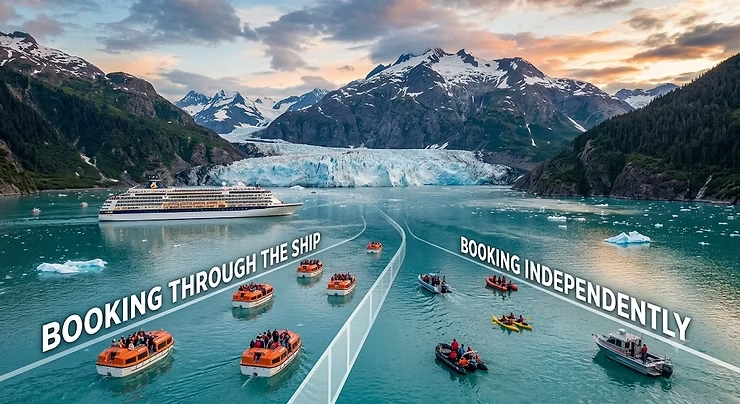
7. Excursions Vary Widely in Physical Demand
Alaska offers an unusually wide range — from gentle scenic drives and cultural visits to helicopter landings, hiking, and kayaking.
There is something appropriate for essentially every ability level, but the descriptions do not always make demands clear. It is worth asking specific questions about walking distance, terrain, and how much standing is involved before booking.
Planning an Alaska Cruise
Alaska rewards planning more than most destinations. Which sailing, which route, which ship, and which excursions all shape the trip considerably, and the differences are not always visible in a brochure.
Krystal Travel works with more than 30 cruise line partners, and Patti Kirst brings over 30 years of travel experience to itinerary planning. Explore our cruise planning services or get in touch to talk through the options. Se habla español.